

Kai Boockmann & Michaela Boockmann
Boockmann Engineering GmbH
Eckartspfad, 97708
Bad Bocklet, Germany
Basics of Magnet Wire Lubrication
Magnet wire processing requires lubrication for the following reasons:
• Protecting wire and insulation
• Increasing production speed
• Protecting winding tools
• Increasing density of windings
Achieving these outcomes consistently demands integration with High-Quality Wire Equipmentand reliable Industrial Magnet Solutions throughout the production line.
Mechanics of Magnet Wire Handling
Imagine an enameled wire, which is pressed to a plane with a load Fz, the friction force to overcome in order to move the wire is a function of Fz. For dry, solid sliding surfaces, the friction force is independent of the speed v of the movement (Figure 1), which is also true for wires lubricated with wax or wax-like materials. Lubrication with oil or grease results in viscous floating, which is dependent on the speed of movement.
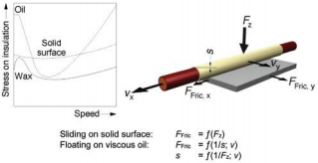
Fig. 1 — Lubrication and friction force.
For high winding speeds and winding density, often a solid dry sliding surface is required. This can be achieved, with limited success, by self-sliding enamels or, more successfully, by polishing with solid sliding agents, mainly paraffin and waxes. The efficiency of this polishing process is often enhanced within a Wire Annealing Furnace or as part of a comprehensive Automatic magnet wire equipment system.
Oily lubricants tend to drain out of the delivery spool. Like grease or high amounts of relatively low melting wax, oil absorbs dust, and coatings with these materials cannot withstand the high specific pressures between crossing wires due to their viscous behavior. Thus their application is mainly preferred for the insertion technique in motor production, etc.
The coefficient of friction as well as the sliding properties, windability and insertability each show optima depending on lubricant quantity. Unfortunately, these optima often are not located in the same range of quantity and thus must be determined by experience.
The dynamic coefficient of friction, measured between a wire and a steel plate (Parussel4), is indicated in Table 1 for different enamel materials and waxes. It is a material property of the applied lubricant, influenced by the wire insulation material. Due to the strong dependence of the coefficient of friction from the lubricant amount on the wire surface (Figure 2), the quantity applied to the surface must be controlled within narrow limits. Additionally the lubricating process influences reliability and uniformity of the lubrication, a factor critical for operators of High-Quality Wire Equipment.
Table 1. Dynamic coefficient of friction for different combinations of insulating and lubricating materials determined according to Parussel4.

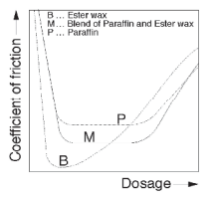
Fig. 2 — Coefficient of friction for different waxes in comparison
Reasons for Solvent-free Lubrication Methods
Solvent-based lubricants consist of nearly 99% of volatile organic compounds (VOC), which are usually released by ventilation systems of factories (Figure 3).
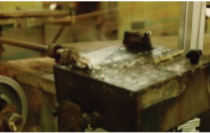
Fig. 3 — Fumes released during solvent-based wire lubrication.
Since governmental regulations (e.g., the European VOC regulation 1999-13-EC5) limit the amount of VOC emissions also specifically from magnet wire production, manufacturers can eliminate an important emission source by using solvent-free lubrication. This shift is increasingly supported by modern Industrial Magnet Solutions and Automatic magnet wire equipment designed for cleaner processes.
And relative to ISO 14000, customers increasingly require programs for environmental protection from their magnet wire suppliers. Also, applied liquids including solutions of solid lubricants get stripped off the wire surface due to increased centrifugal forces on fast-turning guide rolls in high VD enameling machines, with an impact on process reliability and quality.
Solvent-free magnet wire lubrication reduces worker’s health concerns from fumes and prevents severe workplace accidents as well as fire hazard, contributing to a safer operation environment for all Wire Annealing Furnace and stranding systems.
In addition solvent induced attack on the wire enamel as well as on plastic spools are avoided, preserving the integrity of the wire produced on High-Quality Wire Equipment.